

Melamine MDF, short for Melamine Medium Density Fiberboard, is a popular material in the furniture and interior decoration industries. As a melamine MDF supplier, I'm excited to share with you the detailed process of how melamine MDF is made.
Raw Material Preparation
The first step in making melamine MDF is to gather the necessary raw materials. The primary raw material for MDF is wood fibers. These fibers are typically sourced from softwood or hardwood trees. The wood is first debarked to remove the outer layer, which contains impurities and is not suitable for fiber production.
After debarking, the wood is chipped into small pieces. These wood chips are then transported to a digester, where they are cooked under high pressure and temperature. This process breaks down the wood chips into individual fibers. The cooking process also helps to remove any remaining impurities and soften the fibers, making them more suitable for the subsequent manufacturing steps.
In addition to wood fibers, other additives are also used in the production of MDF. These additives include wax, which helps to improve the water resistance of the board, and resin, which acts as a binder to hold the fibers together. The type and amount of additives used can vary depending on the specific requirements of the final product.
Fiber Drying
Once the wood fibers are obtained, they need to be dried to a specific moisture content. The moisture content of the fibers is crucial as it affects the bonding strength and dimensional stability of the final board. Typically, the fibers are dried to a moisture content of around 8 - 12%.
There are various methods for drying the fibers, including rotary dryers and flash dryers. Rotary dryers are large cylindrical drums that rotate slowly, allowing the fibers to be exposed to hot air as they move through the drum. Flash dryers, on the other hand, use a high - velocity stream of hot air to quickly dry the fibers.
During the drying process, it's important to monitor the moisture content continuously to ensure that it meets the required specifications. Over - drying or under - drying the fibers can lead to problems such as poor bonding or warping of the final board.
Resin Blending
After the fibers are dried, they are mixed with resin. The most commonly used resin in MDF production is urea - formaldehyde resin, although other types of resins such as melamine - urea - formaldehyde resin can also be used. The resin acts as a glue that holds the wood fibers together when the board is formed.
The resin is typically sprayed onto the fibers in a blending chamber. The amount of resin added depends on the desired properties of the final board, such as strength and durability. The fibers and resin are thoroughly mixed to ensure an even distribution of the resin throughout the fiber mass.
Mat Formation
Once the fibers and resin are mixed, they are formed into a mat. The mat is a loose layer of resin - coated fibers that will eventually be compressed into a board. The mat is formed on a moving conveyor belt using a forming head. The forming head distributes the fibers evenly across the width of the conveyor belt to create a uniform mat.
The thickness and density of the mat are carefully controlled during the formation process. The thickness of the mat is determined by the desired thickness of the final board, while the density is adjusted by controlling the amount of fibers deposited on the conveyor belt.
Pressing
After the mat is formed, it is transferred to a press. The press applies high pressure and heat to the mat to compress the fibers and cure the resin. There are two main types of presses used in MDF production: continuous presses and multi - opening presses.
Continuous presses are large machines that can produce MDF boards continuously. The mat is fed into the press, and pressure and heat are applied as it moves through the press. The pressure and temperature are maintained for a specific period of time to ensure proper bonding of the fibers.
Multi - opening presses, on the other hand, have multiple chambers where the mats are placed. The press closes, applying pressure and heat to all the mats simultaneously. This type of press is often used for smaller production runs or for producing boards with special requirements.
The pressing process is a critical step in MDF production. The pressure, temperature, and pressing time need to be carefully controlled to ensure the quality of the final board. Too much pressure or heat can cause the board to delaminate or develop other defects, while too little pressure or heat can result in a weak board.
Trimming and Sanding
After the pressing process, the newly formed MDF board is trimmed to the desired size. The edges of the board are cut to remove any irregularities and to ensure that the board has straight and square edges.
Once the board is trimmed, it is sanded to smooth the surface. Sanding removes any rough spots or unevenness on the surface of the board, giving it a smooth and uniform finish. The sanding process can be done using different grits of sandpaper to achieve the desired level of smoothness.
Melamine Lamination
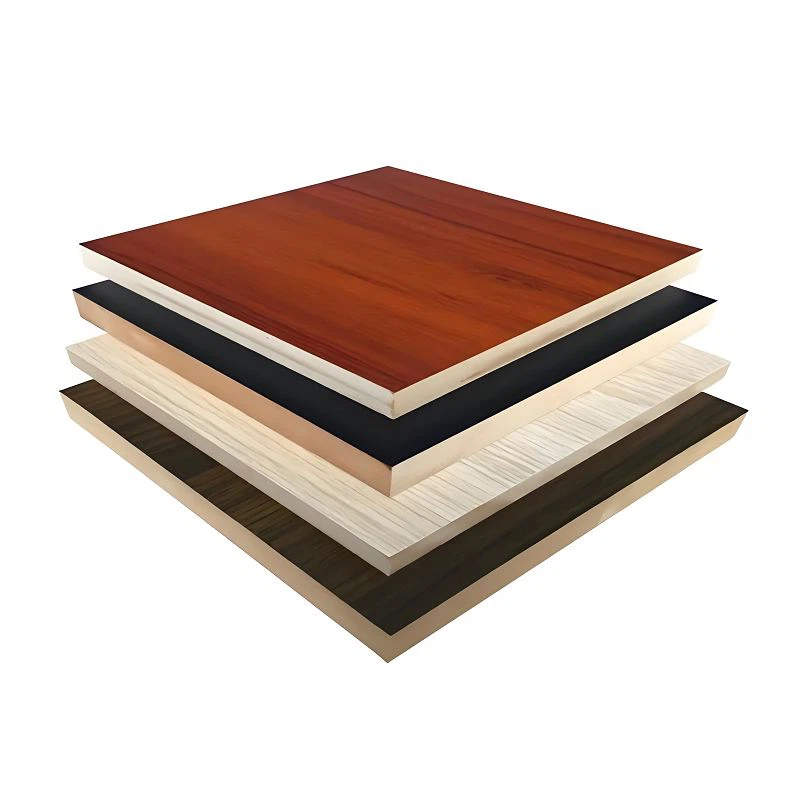
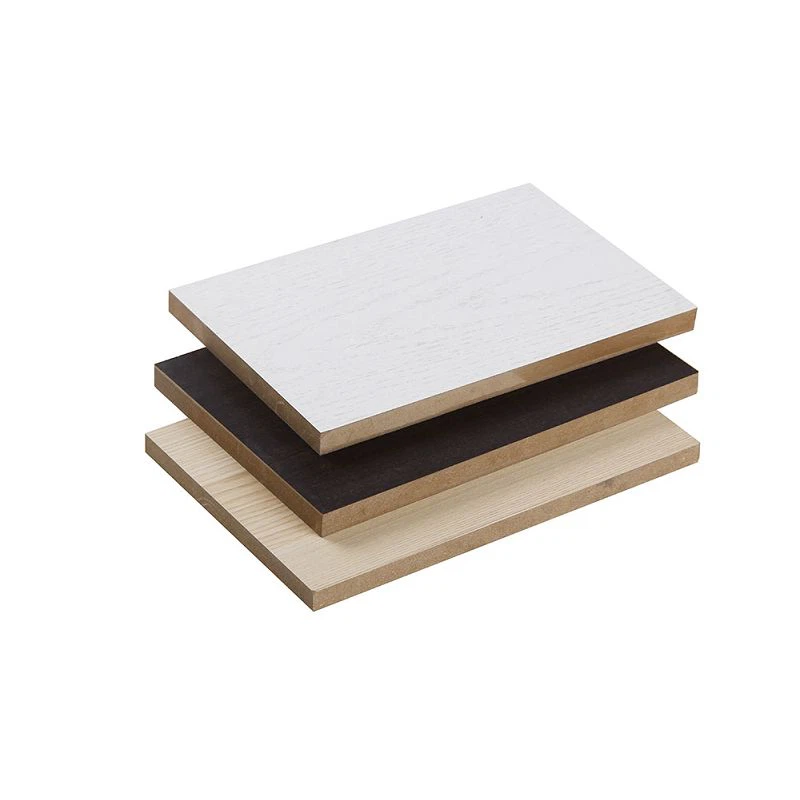
This is a key step for melamine MDF. Melamine is a thermosetting plastic that is used to laminate the surface of the MDF board. The melamine laminate is a thin sheet that is available in a variety of colors, patterns, and textures. It provides the board with a durable, scratch - resistant, and aesthetically pleasing surface.
The melamine laminate is applied to the MDF board using a hot - press process. The laminate is placed on the surface of the board, and pressure and heat are applied to bond the laminate to the board. The pressure and temperature are carefully controlled to ensure a strong bond between the laminate and the board.
Quality Control
Throughout the manufacturing process, strict quality control measures are in place to ensure that the melamine MDF meets the required standards. Quality control checks are carried out at various stages, including raw material inspection, in - process inspection, and final product inspection.
Raw material inspection involves testing the wood fibers, resin, and other additives to ensure that they meet the specified quality requirements. In - process inspection is carried out during the production process to monitor parameters such as moisture content, density, and resin distribution. Final product inspection includes testing the physical and mechanical properties of the finished melamine MDF board, such as strength, stiffness, and surface quality.
Applications of Melamine MDF
Melamine MDF has a wide range of applications. It is commonly used in the furniture industry for making cabinets, wardrobes, and desks. The Furniture Melamine MDF offers a cost - effective and aesthetically pleasing solution for furniture manufacturers.
In the interior decoration industry, Laminated Melamine MDF Panel is used for wall paneling, ceiling tiles, and door skins. The melamine laminate provides a durable and easy - to - clean surface that can enhance the look of any interior space.
Contact for Purchase and Negotiation
If you are interested in purchasing melamine MDF for your furniture or interior decoration projects, I encourage you to get in touch with me. As a reliable melamine MDF supplier, I can offer you high - quality products at competitive prices. Whether you need a small quantity for a DIY project or a large volume for a commercial project, I'm here to meet your needs. Please feel free to reach out for more information and to start the negotiation process.
References
- “Medium Density Fiberboard (MDF) Manufacturing Process.” Wood Technology Research Centre.
- “Melamine Resins in Wood - Based Panels.” Journal of Wood Science and Technology.
- “Quality Control in MDF Production.” International Wood Products Association.